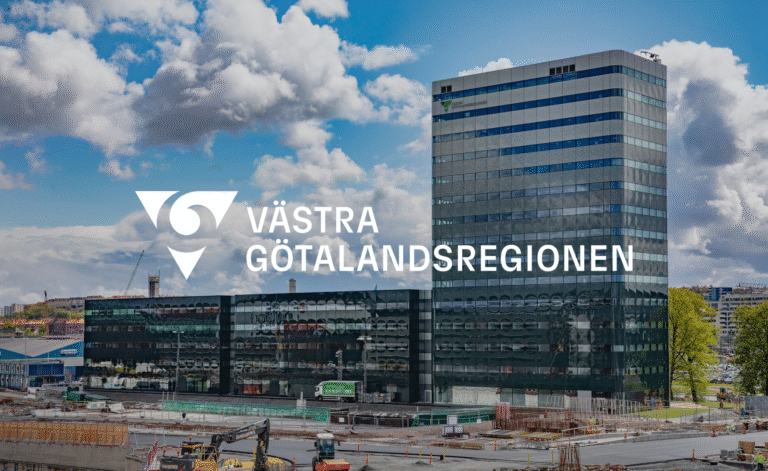
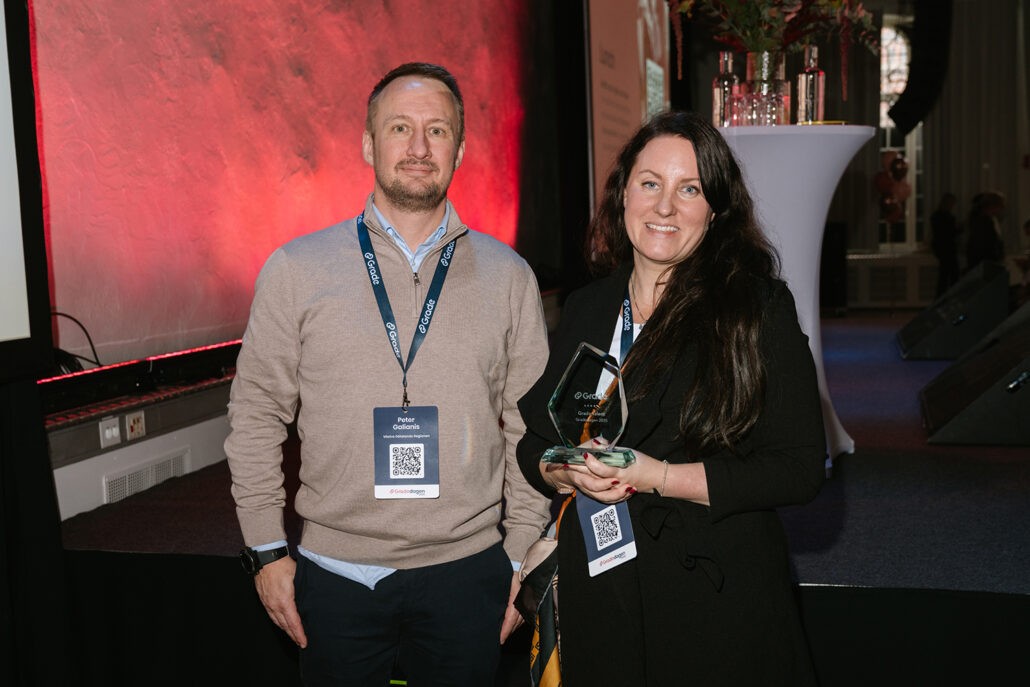
Västra Götalandsregionen named winner of this year’s Talent Award at the Grade Awards

When Västra Götalandsregionen began its journey to implement a new skills management system, the goal was clear: to create a modern, user-friendly, and data-driven solution that simplifies everyday work for both employees and managers.
One year later, they stand as the winners of the Grade Talent of the Year Award—and have simultaneously completed one of the most extensive Grade implementations ever carried out in a Swedish region in such a short time.
“We are very happy to receive this award. And we are very satisfied with the system—but above all, we see that our users are happy. It’s rewarding to work with a system that is appreciated and used in everyday work.”
– Linda Schultz Forsberg, System Manager, Västra Götalandsregionen
Clear direction, shared goals, and an agile way of working
When the project implementation began in 2023, there was a shared and clear vision: the system would be on-premises, automated, centrally managed, and easy to use—while also being sustainable in the long term from a governance and system management perspective.
“What was crucial was that we early on established a clear purpose, shared goals, and a realistic timeline. That provided a stable framework to work within and became one of our key success factors.”
– Linda Schultz Forsberg, System Manager, Västra Götalandsregionen
The project team worked in an agile way, involving the right expertise from HR, IT, and the business units—and breaking the implementation down into clearly defined phases. The work involved listening to and incorporating needs from the organization and addressing any obstacles along the way. Grade recommended starting with the performance review, which quickly proved to be an effective first step in a phased rollout.
‘The performance review is something everyone is familiar with. It made the transition into the digital environment much easier.’
— Tobias Ågren, System Manager
Automation and master data – the foundation for long-term system management
A key success factor was the early decision to involve system management and IT from the very start of the project.
‘This is the first time we’ve been involved from the beginning. It has made everything more reassuring for users—and created a structure that will stand the test of time.’
— Tobias Ågren, System Manager
They established a robust master data management framework and integrated Grade with other systems within the region and with the Swedish National Board of Health and Welfare. The high level of automation ensures that:
- roles and skills are updated automatically
- managers receive the right information immediately
- data follows employees throughout their journey
- administrative work is dramatically reduced
- users benefit from a seamless experience
- systems are built on the same data, with a single source of truth that propagates across all platforms
‘Automation saves an enormous amount of time in the long run. Once everything is flowing, it just runs smoothly.’
— Peter Galianis, System Manager
A large-scale transformation journey driven by clear and effective communication
Västra Götalandsregionen is one of Sweden’s largest employers. Successfully delivering an implementation of this scale—covering 52,000 employees—required a strong and consistent focus on communication, stakeholder alignment, and shared ways of working.
Throughout the project, the project team carried out extensive internal communication efforts. These included regular meetings across the region’s 19 administrations, the establishment of HR networks with super users, weekly newsletters providing updates and roadmap visibility, FAQs addressing the most common questions to create reassurance, and open dialogue forums to encourage discussion and exchange.
At every stage of the rollout, designated representatives from the business were actively involved in testing and implementation. This work was led jointly by the project managers and system management, ensuring close collaboration between the project and long-term operations.
‘We have worked far more with communication than a System Manager normally would. It has been a key factor in bringing users along.’
— Linda Schultz Forsberg
The fact that adoption was voluntary—with no mandatory usage requirements—also meant that each administration had the opportunity to plan its own rollout. This posed a challenge for the project, as the team needed to clearly demonstrate how the system created value in order to encourage administrations to prioritize implementation and provide a compelling incentive to adopt it.
The advantage was a high level of engagement and the successful involvement of motivated representatives across all administrations who actively advocated for the system. This made the success even greater—we carried out the work together with the administrations.
Usage increased rapidly, driven by the clear value delivered and by the system itself meeting WCAG accessibility standards and being perceived as user-friendly.
The result: A data-driven region built on shared ways of working
In less than two years, Västra Götalandsregionen had:
- implemented digital support for development reviews across the entire organization
- established shared competency profiles covering employee roles, professional roles, and learning and training across the organization
- achieved a unified approach to skills and competency management
- enabled skills gap analyses and competency planning from day one of system go-live
- built a stable, modern, and automated system framework
“Bringing an organization of this size into a single, shared system in under two years is unusual. It shows what is possible with skilled people, clear governance, and the right ways of working.”
– Linda Schultz Forsberg, System Manager, Västra Götalandsregionen
What’s next?
Today, the system is used across 18 of 19 administrations and by 82% of Västra Götalandsregionen’s employees. The current focus is on increasing adoption, enriching the system with additional skills data, and leveraging effective ways to analyze, forecast, plan, and follow up on skills and development at the individual, team, and organizational levels.
“Now that we have both the data and the technology in place, we have every opportunity to generate reports and conduct gap analyses.”
— Peter Galianis